
Robot guidance
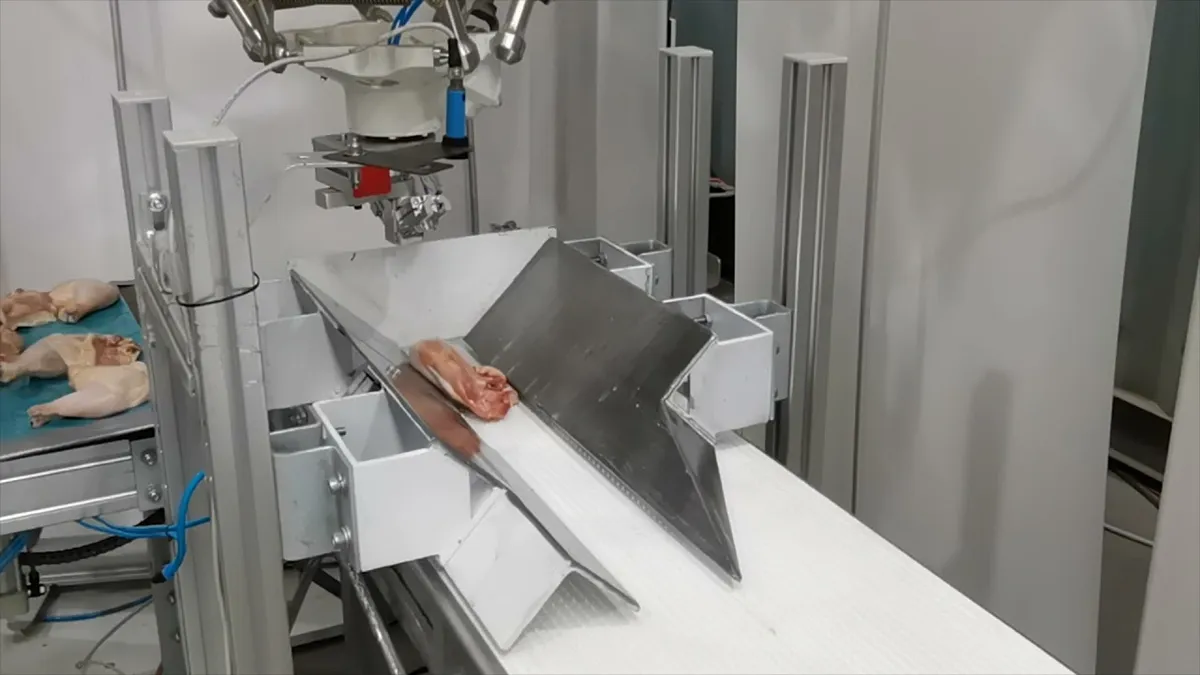
Chicken leg detection
A FANUC Delta M3ia robot with a SCHUNK needle gripper picks each leg guided by a 3D camera and a color camera, and a pneumatic system flips it.
Esta página también está disponible en español. Ver en español
Cameras and software so your line checks every part and, when there is a robot, the robot knows where to pick it. All connected to the PLC and HMI in a single project.
Industrial computer vision uses cameras and software so a machine can see the product and make a decision: accept it, reject it, sort it or tell a robot where it is. As an official FANUC robot integrator since 2017, we combine it with the PLC, the HMI, the line sensors and, when the project calls for it, the robot, because a camera only truly pays off when its result moves something in the plant.
The camera checks every part and the system detects defects automatically. Automated visual inspection improves quality and reduces rework, without relying only on manual visual checks.
You do not always need a robot. We add inspection cameras and software to the line you already have, connected to its PLC and HMI, so the system flags or rejects defective parts. If you later want a robot to act on the result, we integrate a FANUC robot.
When the part does not always arrive in the same position, the camera tells the robot where it is and how to pick it. That is how the system we developed with a FANUC Delta M3ia robot guided by a 3D camera and a color camera works.
FANUC robotsThe software recognizes what is in front of it and classifies it. With banknotes, vision detects the denomination, position and condition of each one so the cell can arrange, count and record them.
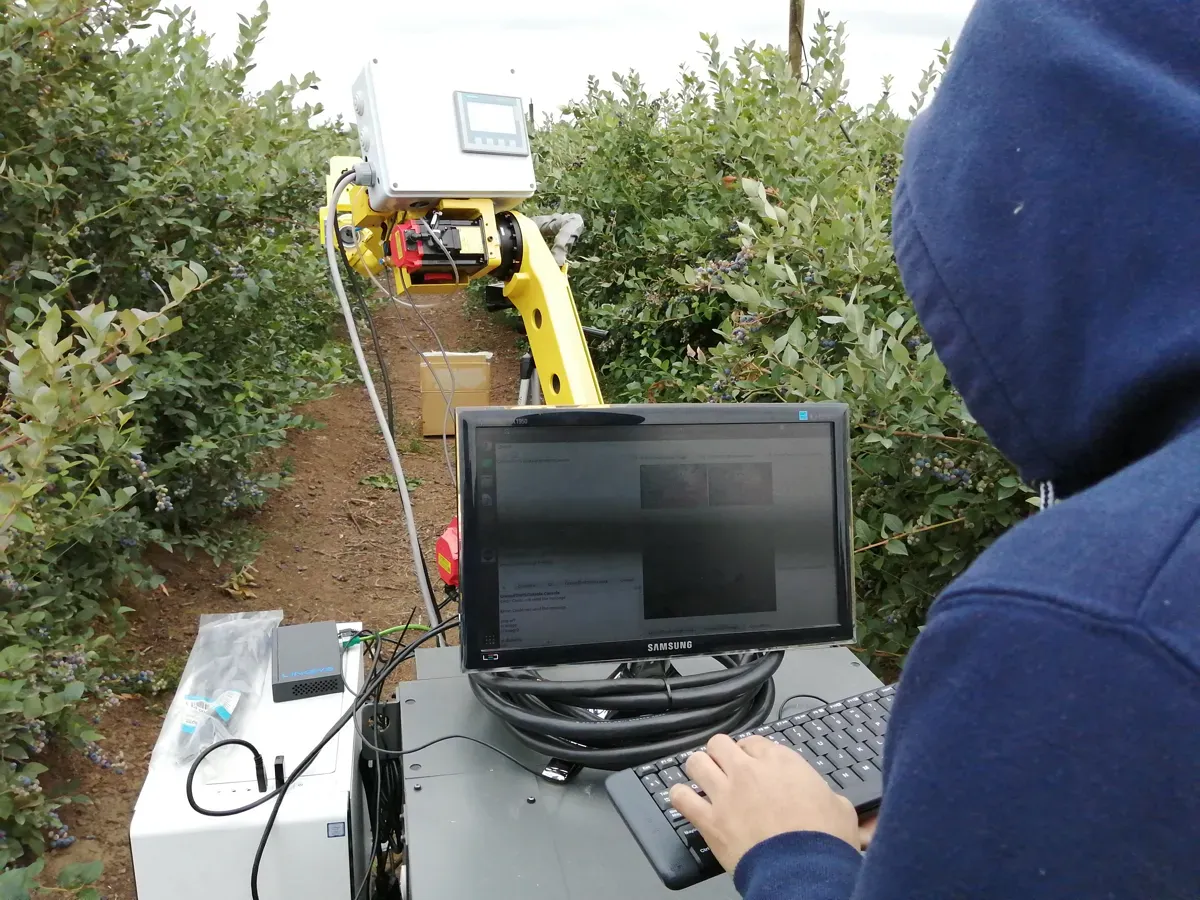
We also test outside the lab. In our blueberry detection and handling project with computer vision, we captured and validated data on a farm to tune the detection, trajectories and behavior of the FANUC robot.
The camera and software are chosen based on what needs to be seen and what has to happen next.
A 3D camera provides the position and height of each part, which is key when a robot has to pick it. A color camera adds what the shape does not show, such as differences in shade. In the chicken leg detection system we use both.
We have worked with different camera brands, and the camera brand we have the most experience with is Basler.
To recognize objects we use computer vision and machine learning models, such as neural networks and deep learning, combined with classic automatic control for precision tasks. We work with the brands your plant already uses, without locking you into one supplier.
The camera is only the beginning. The result has to reach the PLC and the robot for something to happen.
A sensor signals that the part has arrived and the camera takes the image with the lighting that part needs.
The software locates the part, compares it with what is expected and returns a result: position, type, or whether it is good or bad.
The PLC receives that result and acts: the robot picks the part where the camera saw it, the bad part is diverted from the line, or the process stops and raises an alert.
The HMI shows the operator what is happening and every result is logged, which gives the process traceability.
That is why we design the vision system together with the control panel and, if there is a robot, with the robotic cell, even when we add it to a line that is already running.
Developments by our team where vision guides the robot or decides what to do with each part.
A FANUC Delta M3ia robot with a SCHUNK needle gripper picks each leg guided by a 3D camera and a color camera, and a pneumatic system flips it.
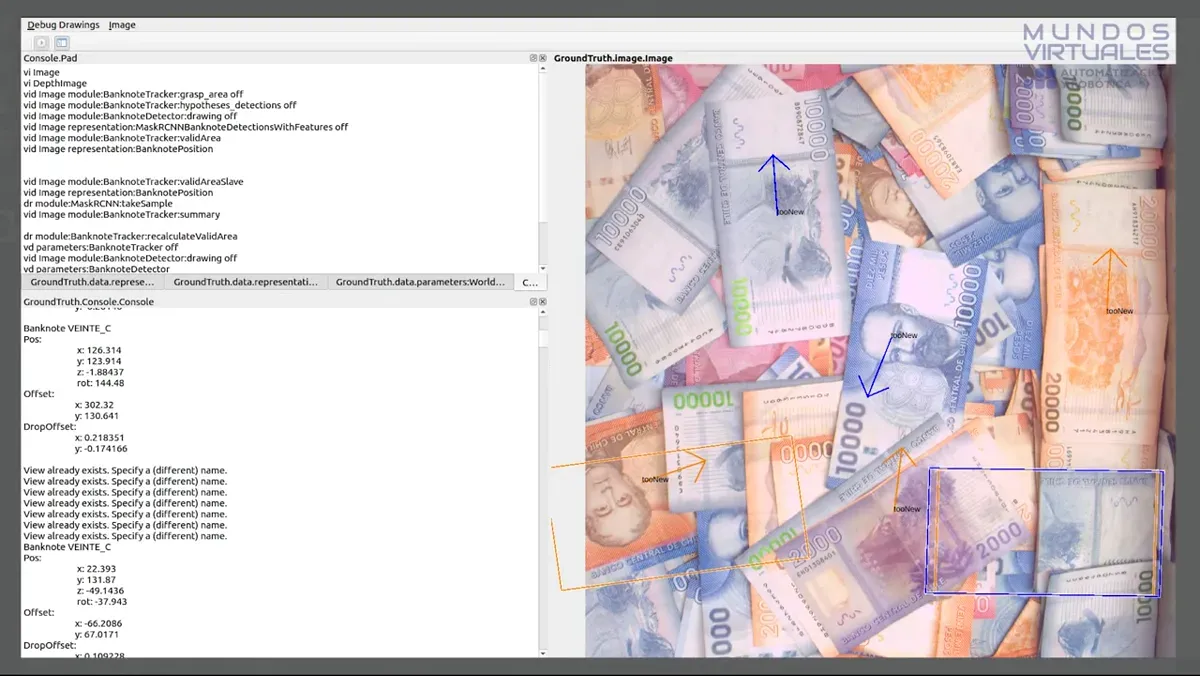
Detects the denomination, position and condition of each banknote so the robotic cell can pick, sort and record it. See it in cash management
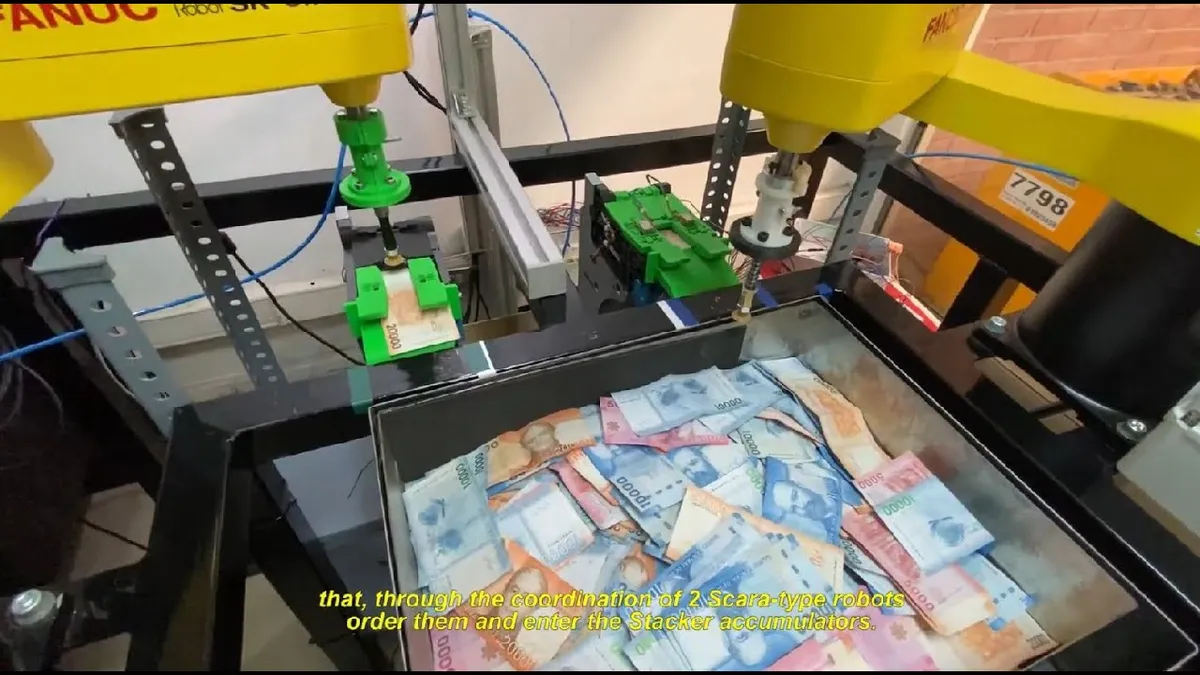
From modeling and simulation to a working prototype: a FANUC SCARA robot with computer vision picks and arranges banknotes with minimal manual intervention.
See also our case studies and how we design and integrate robotic cells.
We do not publish fixed prices: the cost depends on what needs to be detected, the line speed and whether the vision system only inspects or also guides a robot. We quote after the technical assessment.
We serve you from our office at Miraflores 383, Torre Centenario, Floor 22, Santiago, Chile. You can also call us at +56 2 2634 0001.
Can't find your question? Write to us and a specialist from the area will reply.
Tell us which part needs to be inspected or picked and how it arrives today. We will propose the camera, software and integration with your robot or PLC.