
Home
Industrial Automation
Cash Management
Case Studies About Us Contact Español Request a quote

Industrial robotic cells in Chile

We design, integrate and maintain robotic cells: the robot, its end effector, the safety systems and the controls that connect it to your line.
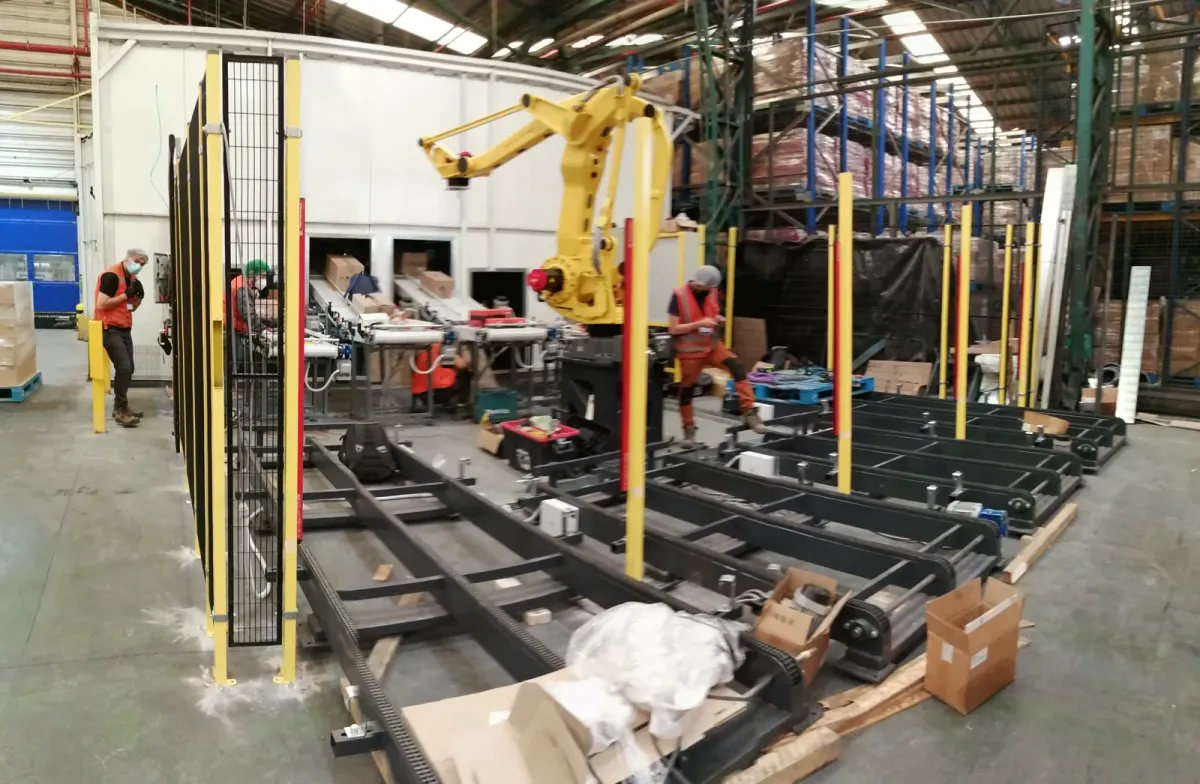
Palletizing cell with a FANUC robot and safety fencing during installation at a plant

What a robotic cell is

A robotic cell is a workstation where one or more robots perform a step of the process, such as palletizing, assembly or machine loading. The robot is only one part: the cell also needs the end effector that picks the part, the guarding that protects people and a control panel that coordinates it with the rest of the line. We handle all of that in a single project.

What a robotic cell includes

Robot

We are an official FANUC robot integrator. We choose the model based on the payload, reach and speed the application requires.

FANUC robot integration

Gripping tool

As an official SCHUNK distributor in Chile for gripping systems, we use SCHUNK grippers. When none of them fits the part, we design a custom one and build it with 3D printing and machining in our workshop.

SCHUNK and custom grippers

Safety guarding

Fencing, sensors and guarding defined according to the cell layout, with operator safety in mind.

Control panel, PLC and HMI

We design and build the electrical panel, program the PLC and HMI screen, and connect the cell to conveyors, sensors, computer vision and the machines already running on the line.

Robotic cell projects

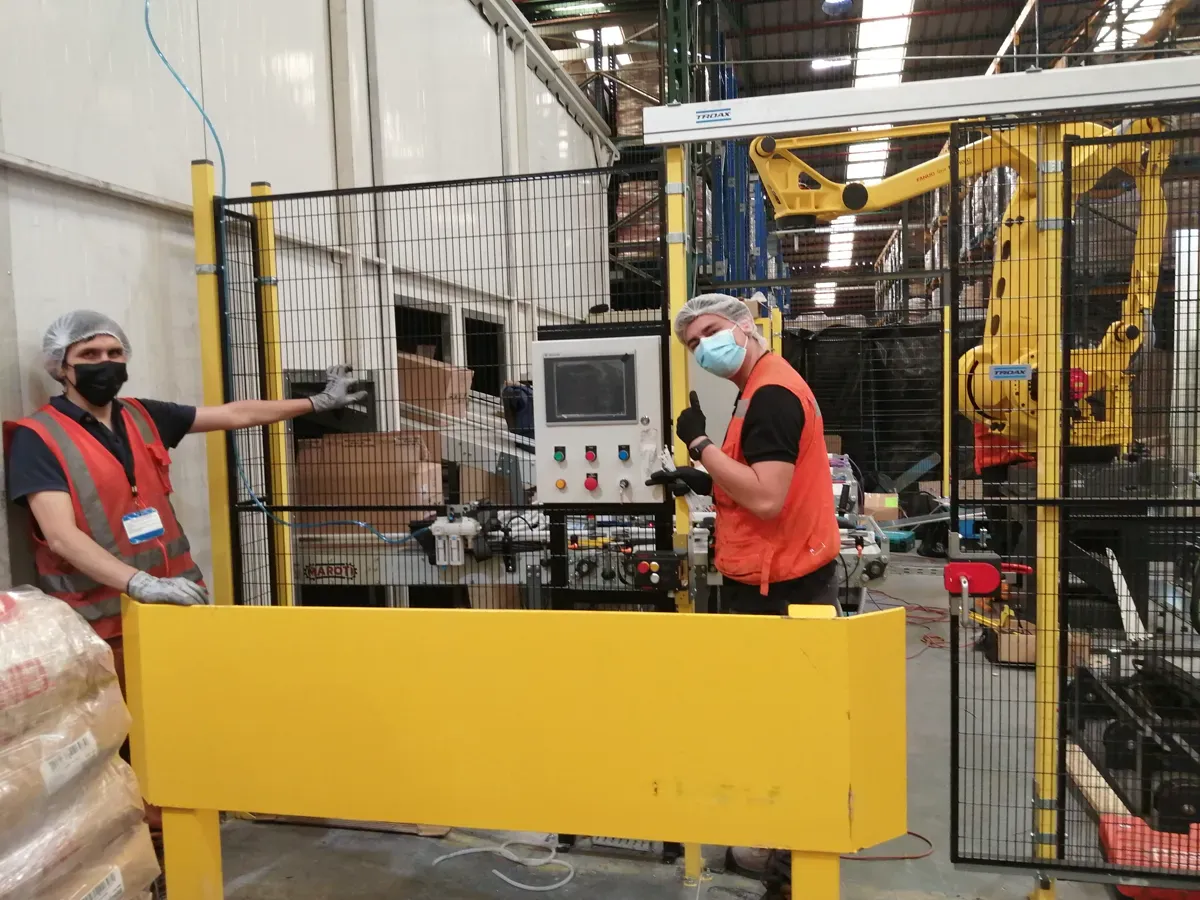
Two technicians next to a robotic cell with an industrial robot, a control panel with a screen and safety fencing
Manufacturing

Robotic cell in production

Industrial robot, control panel and safety guarding to automate a critical production step.
Assembly

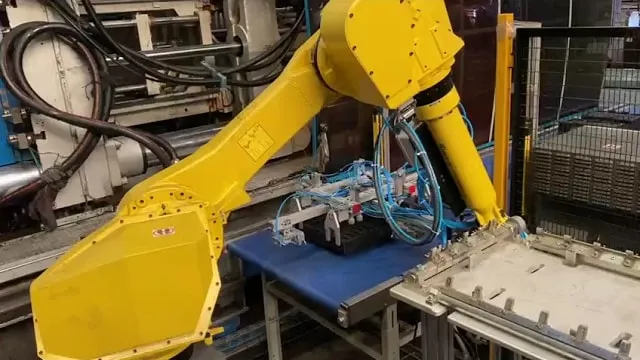
Unloading and assembling plastic crates

Next to an injection molding machine, the robot receives the 5 parts of each collapsible crate and works with a table that presses and locks its sides.
Machine tending

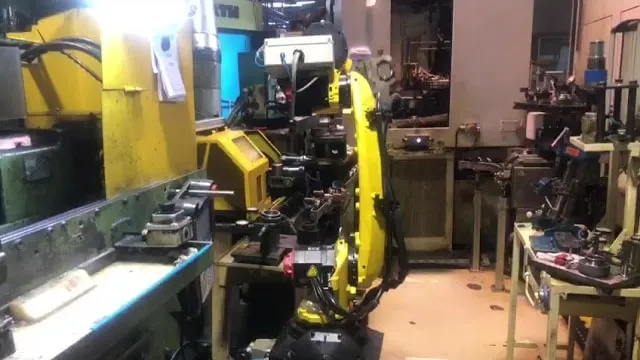
Lathe, milling and chamfering machine loading

A gripper positions and loads parts into a lathe, a milling machine and a chamfering machine, automating machine feeding.

We also install end-of-line palletizing cells, and we developed a multi-robot cell with two coordinated FANUC robots to handle banknotes. See more projects in our case studies and in cash management.

Applications and industries

A robotic cell makes sense for repetitive or heavy tasks, or tasks that require consistent precision: palletizing, handling, assembly, machine tool loading and vision-based inspection or guidance.

In vision, for example, we developed a chicken leg detection system with a FANUC Delta M3ia robot and a SCHUNK needle gripper, guided by a 3D camera and a color camera.
Industries we serve

Food and beverage Mining Manufacturing Logistics and warehousing Packaging Energy Agribusiness
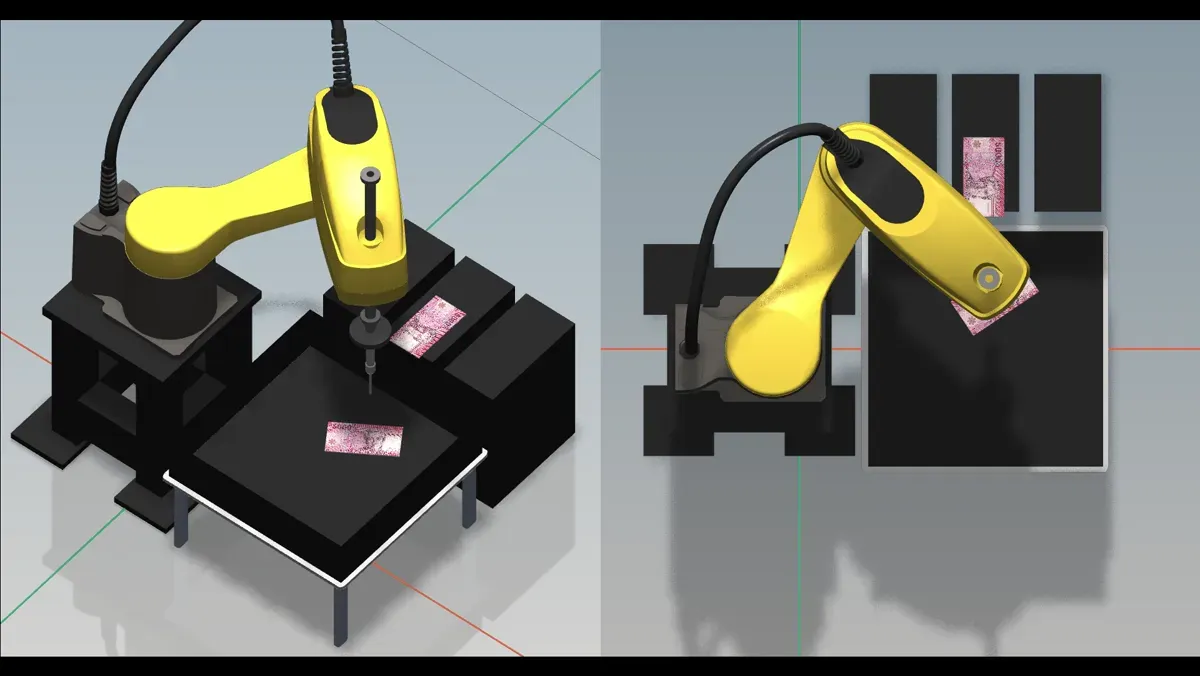
3D simulation of a cell with a SCARA robot picking banknotes, in perspective and plan view

How the project runs

Assessment
We review the process and your goals, and propose the scope, technologies and work plan.
Design and simulation
We define the robot, layout and cycle times, and validate them in 3D simulation before building.
Fabrication and integration
We build tooling and parts in our workshop, assemble the panel and program the robot, PLC and HMI.
Testing and commissioning
FAT and SAT testing as required, on-site installation and start-up support.
After-sales
Preventive and corrective maintenance, program adjustments, recipe changes and spare parts.

How much does a robotic cell cost?

We do not publish fixed prices, because every cell is designed for a different process. We quote after the technical assessment.

If the cell goes into a line that is already producing, we coordinate maintenance windows and work in stages when needed, to minimize the impact on production.

What drives the cost

Robots
How many, and what payload, reach and speed they need.
End effector
Standard gripper or one designed and built to order.
Safety
Fencing, sensors and guarding based on the layout.
Controls and integration
Panel, PLC, HMI, vision and connection to existing machines.
Commissioning
FAT and SAT testing, installation and start-up.

Robotic cell FAQ

Can't find your question? Write to us and a specialist from the area will reply.

What is a robotic cell?
It is a workstation where one or more robots perform a step of the process, such as palletizing, assembly or machine loading. Besides the robot, it includes the end effector that picks the part, the safety guarding and a control panel that coordinates it with the rest of the line.
How much does a robotic cell cost in Chile?
It depends on the process: the robot, the end effector, safety, integration with the line and commissioning. We do not publish fixed prices. We quote after a technical assessment and propose the scope, technologies and work plan.
Can the cell connect to my machines and my PLC?
Yes. We work with the PLC brands your plant already uses and connect the cell to conveyors, sensors, vision and the machines already running on the line.
What safety does a robotic cell include?
Fencing, sensors and guarding defined according to the cell layout. Every cell is designed with operator safety and equipment maintainability in mind.
Do you build cells with more than one robot?
Yes. We developed a cell with two coordinated FANUC robots that handle banknotes simultaneously, with our own grippers and computer vision.
What happens after commissioning?
We stay in charge: preventive and corrective maintenance, program adjustments, recipe changes, robot calibration and spare parts.

Which task on your line do you want to robotize?

Tell us about the process and we will propose the scope, technologies and work plan, including after-sales support.